
On 4 November 2025, the MAIA SESAR Project successfully held its Final Event at Fira Barcelona, bringing together stakeholders from research, industry, public authorities, and the wider mobility ecosystem to explore how innovative multimodal solutions can strengthen the connection between airports and city centres. With a strong turnout and highly engaged audience, the event marked an important milestone for the project’s conclusion.
The morning began with a brief welcome and an introduction to the MAIA event, followed by a presentation from the project officer of the SESAR Joint Undertaking, situating the project within the wider SESAR funding framework and its role in advancing smart, sustainable mobility across Europe.
Participants then received a comprehensive overview of the MAIA project, its objectives, and its mission to support regions and airports in navigating the transition toward more integrated, data-driven, and future-proof transport systems.
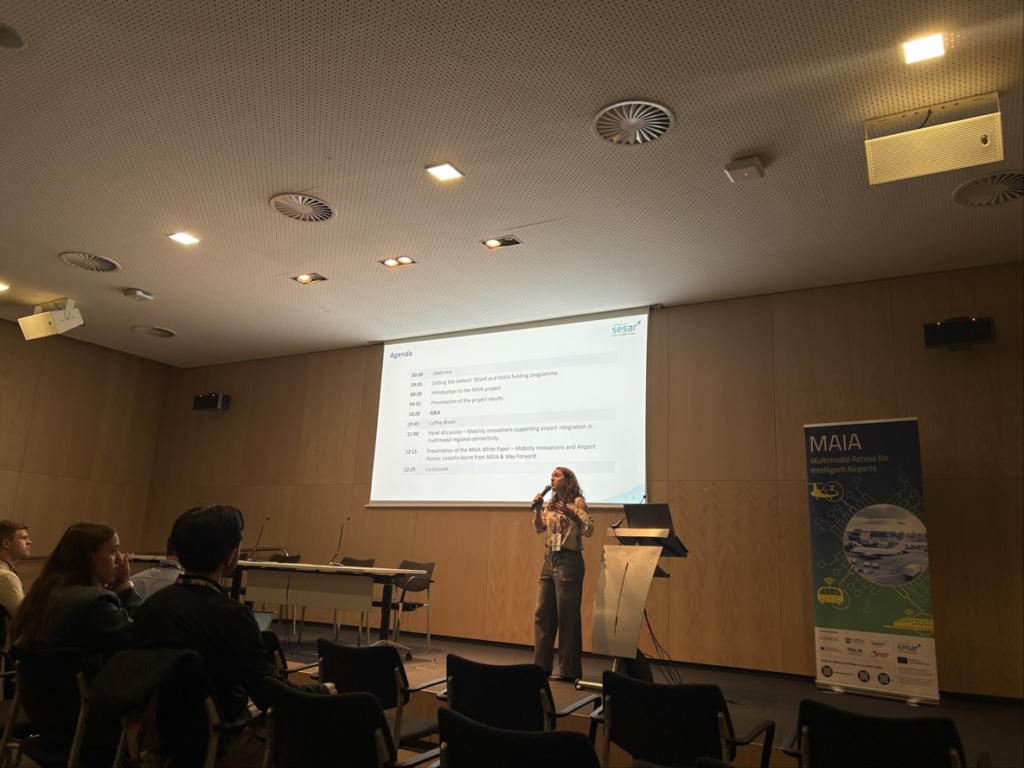
A central part of the event was dedicated to the presentation of MAIA’s three main workstreams:
Each presentation highlighted key findings, methodologies, and real-world use cases, followed by an engaged Q&A session with the audience.
More detailed information on the MAIA tools and results is available here:


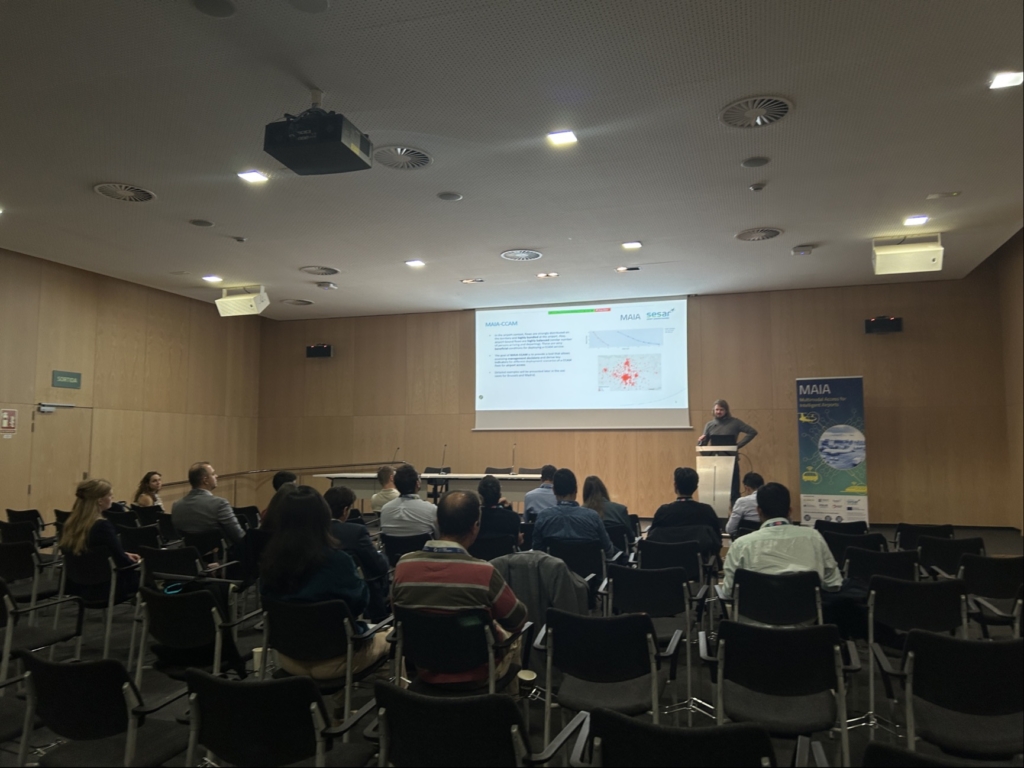
After a short coffee break, the event continued with a dynamic panel discussion on “Mobility innovations supporting airport integration into multimodal regional connectivity.”
Experts from cities, airports, industry, and research reflected on the opportunities and challenges of future mobility systems. Some key insights from the debate included:


Before concluding, the project team presented the overall structure and current state of work of the White Paper “Mobility Innovations and Airport Access: Lessons Learnt from MAIA and Way Forward.”
The document brings together the project’s main findings and outlines the path forward for regions and airports aiming to embrace smarter, greener, and more connected mobility systems.
The above-mentioned White Paper is going to be finalised by the end of November 2025. Following this, it must go through an official review process by the funding authority SESAR Joint Undertaking. The whole text is going to be publicly available for all those interested in the MAIA website and will be further disseminated via the MAIA social media channels.
The MAIA Final Event successfully demonstrated how collaborative research, cutting-edge modelling tools, and cross-sector innovation can support the evolution of European transport systems. The high level of participation and active engagement throughout the morning underscored the relevance and urgency of improving airport–city connectivity in a multimodal and sustainable way.
The project team extends its warm thanks to all speakers, panellists, participants, and partners who contributed to the success of the event and the MAIA project as a whole.